
- All
- Product Name
- Product Keyword
- Product Model
- Product Summary
- Product Description
- Multi Field Search

Views: 0 Author: Site Editor Publish Time: 2026-03-17 Origin: Site


Lighting plays a crucial role in any space, but which is better: linear lights or LED panels? With sleek designs and energy efficiency, both lighting options are popular for residential and commercial spaces.
In this article, we will explore the differences between linear lights and LED panels, including their applications, performance, and design versatility. You will learn how Custom Shapes Linear Lighting can enhance your unique space and whether linear lights or LED panels are better suited for your needs.
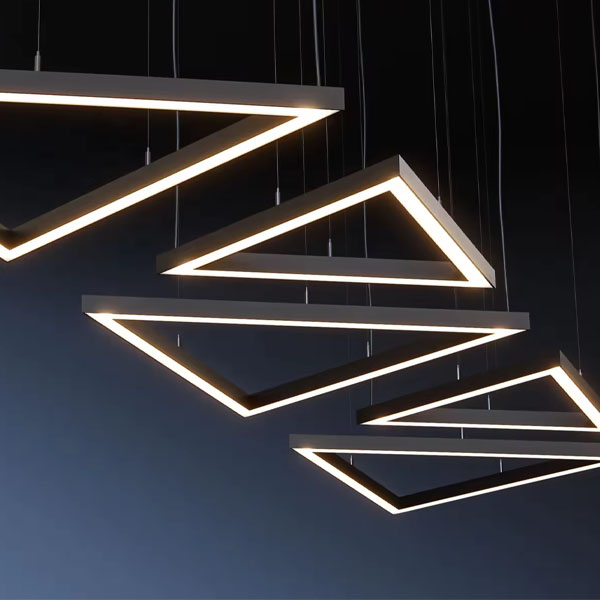
LED linear lights are long, narrow fixtures that provide continuous, uniform illumination across a large area. Their clean, modern design makes them perfect for contemporary spaces, and their flexible mounting options (surface-mounted, recessed, or suspended) make them highly adaptable to various settings. Whether you’re lighting up a hallway, kitchen island, or office corridor, linear lights provide excellent illumination that’s both practical and stylish.
● Applications: LED linear lights are often used in modern offices, kitchens, corridors, retail stores, and even architectural settings where creating a sleek, minimalist look is important.
● Custom Shapes Linear Lighting: At Superlightings, we offer Custom Shapes Linear Lighting that allows you to tailor the light fixtures to fit your specific design needs. With customizable lengths and shapes, you can create a lighting layout that fits perfectly into your space, offering both functionality and a modern aesthetic.
LED panels are flat, rectangular, or square light fixtures that deliver even, diffuse illumination across a large surface area. They are popular for their ability to reduce glare while providing uniform brightness, making them ideal for settings like offices, classrooms, and hospitals, where clear and consistent lighting is essential. Most LED panels are recessed into ceilings, offering a clean, professional look that blends seamlessly into the room’s architecture.
● Applications: LED panels are commonly used in professional and healthcare environments such as offices, schools, conference rooms, and hospitals.
● Minimalist Design: With their slim profile, LED panels offer a minimalist, unobtrusive design, ideal for creating a soft, even light source across expansive areas.
The most obvious difference between linear lights and LED panels lies in their structure and intended use. Linear lights are versatile and provide directional or continuous lighting, making them perfect for tasks or accent lighting. They work well in spaces that require creative lighting arrangements. LED panels, however, provide broad, even lighting, which is perfect for uniform light coverage across large areas. They’re often chosen for their ability to provide soft, glare-free illumination, especially in environments where people will be spending long periods under the light.
Feature | Linear Lights | LED Panels |
Design | Sleek, modern, versatile designs | Minimalist, flat design |
Light Distribution | Directional, continuous lighting | Uniform, diffuse lighting |
Best Applications | Task lighting, accent lighting, modern interiors | Offices, classrooms, hospitals |
Installation Flexibility | Highly customizable and flexible | Mostly recessed or surface-mounted |
When it comes to design, linear lights are favored for their ability to complement contemporary and minimalist interior designs. These lights come in various styles and mounting options, allowing you to customize them according to your space. Their long, narrow form makes them perfect for highlighting specific features such as shelves, counters, or architectural elements.
In contrast, LED panels are more suitable for professional, clean, and simple designs. Their flat, square, or rectangular shape allows them to blend seamlessly into ceilings, providing consistent illumination without being an eyesore. They work well in offices, hospitals, and classrooms, where the design focus is on functionality rather than aesthetics.
● Linear Lights: Ideal for spaces requiring accent lighting or modern, stylish designs.
● LED Panels: Best for areas needing consistent, uniform lighting with minimal glare.
Linear lights provide a continuous stream of light, which is perfect for long corridors, aisles, or countertops. They offer precise and focused lighting, making them ideal for task lighting and accentuating certain areas. For example, linear lights can be installed along a kitchen island to provide bright, focused lighting while maintaining a sleek design.
On the other hand, LED panels are designed to spread light evenly across a large area, making them perfect for environments where uniform illumination is necessary. Their diffuse light quality reduces shadows and hotspots, making them ideal for offices or healthcare settings.
● Linear Lights: Best for directional or task lighting.
● LED Panels: Best for providing uniform, diffuse lighting across large areas.
Both linear lights and LED panels offer significant energy savings compared to traditional lighting options. Linear lights provide efficient illumination while maintaining a low power consumption, making them a great option for spaces requiring focused lighting, like office workstations or retail displays.
LED panels, however, offer better energy efficiency when it comes to illuminating large areas with soft, consistent light. Their ability to provide wide, even lighting means fewer fixtures are needed to light up an entire room.
Light Type | Linear Lights | LED Panels |
Efficiency | Energy-efficient, ideal for task lighting | Excellent for even illumination in larger spaces |
Applications | Retail, offices, corridors, kitchens | Offices, hospitals, classrooms |
One of the biggest advantages of linear lights is their flexibility. These lights can be mounted in various ways—surface-mounted, recessed, or suspended—giving you the freedom to customize the lighting layout according to your design preferences. Superlightings also offers Custom Shapes Linear Lighting, allowing you to create a tailored lighting solution that fits perfectly into any design, no matter the shape or size of the space.
LED panels, on the other hand, are often installed recessed into the ceiling, though some models allow for surface mounting. The installation flexibility of LED panels is more limited compared to linear lights, especially in creative or custom lighting setups. These lights are often chosen for their simplicity and ability to seamlessly integrate into the architecture of the space.
Installation Option | Linear Lights | LED Panels |
Flexibility | Highly customizable and adaptable | Limited to recessed or surface-mounted |
Ease of Installation | Moderate to high, depending on configuration | Easy but less flexible for custom designs |
Linear lights typically last between 30,000 to 50,000 hours, depending on their quality and usage. This long lifespan means fewer replacements and lower maintenance costs over time. The high efficiency of linear lights ensures they continue to perform optimally throughout their life.
LED panels also have a long lifespan, typically 30,000 to 50,000 hours. However, the lifespan can be shorter if the panels are made from lower-quality components. Regular maintenance and ensuring proper ventilation can help extend their longevity.
Linear lights are perfect for spaces that require modern, flexible, and customized lighting. They are ideal for accent lighting, task lighting, and areas that benefit from creative lighting arrangements, such as retail stores, offices, and kitchens.
● Best for: Modern, creative layouts, task lighting, architectural applications.
● Ideal for: High-ceiling spaces, areas needing design flexibility.
LED panels are best for spaces requiring uniform, soft light. They provide excellent illumination for offices, healthcare facilities, and classrooms, where even brightness and minimal glare are important.
● Best for: Uniform, consistent lighting, professional environments.
● Ideal for: Offices, hospitals, conference rooms.
LED panels generally have a moderate initial cost, making them a budget-friendly option for office and commercial spaces. However, linear lights may come with a higher upfront cost but provide more value in the long term due to their design flexibility, energy efficiency, and longer lifespan.
● LED Panels: Affordable initial investment for basic lighting needs.
● Linear Lights: Higher upfront cost but more value in the long run.
Linear lights provide excellent ROI, especially in spaces that require customized layouts and creative designs. They also offer energy savings due to their efficiency. LED panels are a great choice for standard lighting setups and also offer good ROI, particularly in environments like offices and classrooms.
Choosing between linear lights and LED panels depends on your space's needs. Linear lights from Superlightings offer design flexibility, creative lighting, and energy efficiency, perfect for modern, customizable spaces. LED panels, however, are ideal for uniform, consistent lighting with minimal glare. Both are energy-efficient, so choose based on your design preferences and lighting requirements.
A: Linear lights are long, narrow fixtures providing continuous illumination, while LED panels are flat and designed for even, diffuse lighting. Linear lights offer more flexibility in design and installation, such as Custom Shapes Linear Lighting, whereas LED panels are ideal for uniform brightness.
A: Linear lights are best for modern, customized designs and creative layouts. They are ideal for task lighting and accent lighting. On the other hand, LED panels provide uniform, broad lighting, making them perfect for spaces requiring consistent brightness.
A: Both linear lights and LED panels are energy-efficient, but linear lights typically consume less power for targeted, directional lighting. LED panels are designed for large areas and deliver efficient, consistent lighting, but they may consume more power for broader coverage.
A: Yes, Custom Shapes Linear Lighting allows for highly personalized designs. Linear lights can be customized in length, shape, and color temperature, making them a great option for unique spaces and layouts.
A: Yes, linear lights are perfect for home use, especially in kitchens, hallways, and living rooms. Their sleek design, energy efficiency, and customizable options, such as Custom Shapes Linear Lighting, make them an ideal choice for modern interiors.


