
- All
- Product Name
- Product Keyword
- Product Model
- Product Summary
- Product Description
- Multi Field Search

Views: 154 Author: Site Editor Publish Time: 2026-06-22 Origin: Site


Lighting design is shifting rapidly. We are moving away from legacy, bulb-based wall sconces. Today, we embrace integrated architectural lighting. Traditional fixtures rely heavily on decorative housings. Modern spaces, however, prioritize light quality and spatial efficiency. Project managers, designers, and homeowners face a common challenge. They struggle to balance aesthetic impact with functional illumination. This is especially true in space-constrained or high-traffic areas.
Our goal is to help you navigate this transition. We provide an objective, spec-driven comparison. We evaluate the linear wall light against traditional wall fixtures. You will understand their performance metrics clearly. We will explore installation realities, hardware limitations, and spatial compliance guidelines. This comprehensive guide will help you finalize your lighting schedules confidently.
Form Factor: Linear fixtures offer low-profile, ADA-compliant depths, whereas traditional sconces often protrude significantly into walkways.
Light Distribution: Traditional fixtures create focal points or "scalloped" effects; linear fixtures deliver continuous, even illumination that eliminates dark spots.
Efficiency & Maintenance: Integrated wall-mounted LED systems offer superior lumens-per-watt and eliminate the need for routine bulb replacements compared to traditional incandescent or halogen setups.
Installation Reality: Linear fixtures require precise leveling and careful wall preparation, while traditional single-point sconces are generally more forgiving of uneven drywall.
The physical footprint of a fixture dramatically impacts room flow. You must consider the dimensional differences carefully. Traditional sconces frequently extend six to ten inches from the wall surface. This deep projection dictates furniture placement. It also impedes traffic flow in narrow commercial areas. Bulky fixtures can make a standard corridor feel unnecessarily cramped. They often become physical hazards in busy, fast-paced environments.
You can eliminate these spatial issues with modern linear designs. A slim LED wall light sits nearly flush with the surface. It preserves valuable square footage in your floor plan. It provides a clean, unobtrusive architectural look. You gain immense flexibility in how you utilize your walkable space.
ADA compliance demands specific physical measurements. The Americans with Disabilities Act (ADA) outlines strict guidelines for public spaces. Commercial and multi-family residential corridors require clear, safe pathways. Wall fixtures must protrude no more than four inches from the wall. This rule applies when fixtures sit between 27 and 80 inches above the finished floor. Traditional sconces rarely meet this standard without extensive, labor-intensive wall recessing. Low-profile linear fixtures offer an out-of-the-box compliant solution. They protect visually impaired pedestrians relying on canes. They also keep your project perfectly aligned with strict municipal building codes.
You must understand optical output to light a space correctly. Traditional fixtures act as distinct point sources. They draw your eye directly to the physical lamp. This creates localized pools of intense light. It often causes a harsh "scalloped" shadow effect on the wall. This style works perfectly for dramatic mood lighting. It performs poorly for general task visibility. Dark spots naturally form between each individual sconce.
Linear formats distribute light across a much wider surface area. They eliminate these harsh shadow zones completely. The light washes walls evenly and smoothly. This broad distribution reduces harsh optical glare. It minimizes visual fatigue for building occupants. You experience a seamless, comfortable glow rather than punctuated bright spots.
Directional versatility adds another layer of precise design control. An up-down LED linear configuration offers immense utility. Dual-directional lighting layers a room beautifully. It simultaneously highlights architectural ceiling details. It also illuminates the floor path safely for pedestrians. This approach avoids the dreaded "runway effect." Long corridors often look like airport runways when lit by repeated point sources. Dual-directional linear lighting softens the entire corridor. It makes the enclosed environment feel wider and much more inviting.
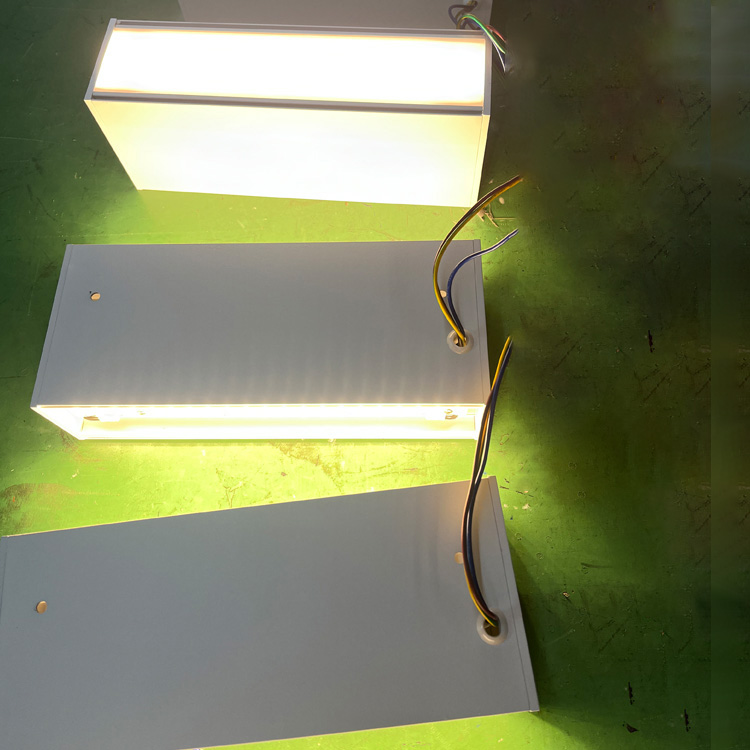
Mounting mechanics differ wildly between these two lighting categories. Traditional sconces offer very straightforward hardware installations. They typically mount directly to a standard circular junction box. An octagonal junction box works perfectly too. A simple metal crossbar holds the fixture securely in place. Drywall imperfections rarely cause major structural issues. The small, decorative backplate easily hides minor wall flaws and uneven paint lines.
Linear alignment requires significantly more precision and patience. You must understand the practical experience of installing longer fixtures. They certainly save space, but they demand careful handling. Fixtures measuring over 24 inches require precise leveling. You need multiple anchoring points to secure them flush against the wall. Perfectly flat drywall becomes absolutely essential. Any physical wave in the wall surface will cause visible gapping. A gap between a rigid linear fixture and the wall looks highly unprofessional. You must prepare the wall surface meticulously before mounting.
Wiring and drivers introduce another critical planning step. Traditional fixtures run direct line-voltage straight to a socket. You simply screw in a standard bulb. Integrated wall-mounted LED fixtures operate differently. They rely on specialized low-voltage LED drivers. You must house these electronic drivers safely. They either sit neatly within the fixture canopy or remain hidden remotely. This becomes a major hurdle for retrofits. If you lack existing deep wall boxes, driver placement gets complicated. You may need to open the drywall to accommodate remote driver boxes. Always confirm internal driver dimensions before starting your retrofit project.
Traditional lighting technology struggles constantly with heat generation. Halogen and incandescent bulbs waste massive amounts of energy as heat. This heat problem creates several practical design issues. The high temperatures can severely damage nearby artwork. They can warp sensitive wood finishes over time. They also pose safety risks in high-traffic commercial zones. A child or pet touching a hot halogen sconce can suffer serious burns.
LED technology offers exceptional thermal efficiency and safety. A modern wall fixture manages internal heat expertly. They utilize extruded aluminum housings. These metal housings function as massive, passive heat sinks. They pull heat rapidly away from the sensitive diodes. This keeps the exterior fixture entirely cool to the touch. It also drastically extends the functional life of the integrated components. You will often see these architectural modules rated for 50,000+ hours of continuous use.
Sustainability protocols demand highly efficient lighting solutions today. Integrated LEDs easily meet stringent modern energy codes. California's Title 24 sets high bars for energy consumption limits. Advanced linear fixtures comply with these strict rules effortlessly. Municipal Dark Sky ordinances also dictate exterior and transitional lighting rules. These codes require specific design considerations:
Full Cut-Off Optics: Designs must prevent upward light pollution entirely.
Shielding: Glare must be contained to protect nocturnal ecosystems.
Directional Precision: Light must illuminate only the intended walking path.
You achieve complete regulatory compliance while maintaining stunning architectural aesthetics.
You need a structured approach to choose the correct fixture type. We developed a clear framework to guide your final decision. Review the specific physical needs of your space carefully.
Use this summary chart to compare core attributes objectively:
Feature Metric | Traditional Sconce | Linear Wall Light |
|---|---|---|
Light Distribution | Point source, localized pools | Continuous, even wall wash |
ADA Compliance | Rarely compliant out-of-the-box | Highly compliant (slim depths) |
Installation Tolerance | Forgiving of wall imperfections | Requires perfectly flat drywall |
Aesthetic Tone | Vintage, decorative, classic | Minimalist, architectural, sleek |
Glare Profile | Moderate to high | Low (diffused surface area) |
When to Choose Traditional Sconces:
Historical restorations or vintage-themed spaces requiring period-accurate aesthetics.
Projects requiring simple, user-replaceable bulbs without involving specialized technicians.
Walls with significant surface imperfections where long, rigid fixtures simply will not sit flush.
Rooms where you actively desire dramatic, scalloped wall shadows for intense mood lighting.
When to Shortlist Linear Wall Lights:
Modern minimalist, industrial, or contemporary commercial spaces.
Narrow hallways, stairwells, and bathrooms requiring shadow-free, ADA-compliant lighting profiles.
Spaces requiring high-lumen ambient output without the visual clutter of multiple individual fixtures.
Environments demanding low physical profiles to prevent accidental pedestrian impacts.
Evaluating exact specifications requires trust and technical transparency. You must verify several internal details before purchasing. Check the Color Rendering Index (CRI). Aim for a CRI greater than 90 for residential or high-end retail spaces. This metric ensures structural colors appear natural and vibrant. Verify your dimming protocol compatibility precisely. Understand the distinct difference between TRIAC and 0-10V dimming systems. TRIAC works flawlessly with standard residential line-voltage wiring. 0-10V requires running dedicated low-voltage control wires behind the drywall. Finally, always confirm exact driver block dimensions. Ensure your electrical wall boxes can house them securely and safely.
The choice between traditional and linear wall fixtures goes beyond simple decorative aesthetics. It is fundamentally a choice between decorative point-source lighting and architectural spatial enhancement. Traditional sconces add classic charm and distinct, moody shadows. Linear options offer seamless illumination and superior space efficiency. They solve complex corridor clearance issues effortlessly while modernizing the environment.
You can now finalize your lighting procurement with complete confidence. Assess your existing junction box placements carefully. Measure your physical corridor widths to determine strict ADA clearance needs. Review your manufacturer specification sheets for precise dimming compatibility. Check your wall surface flatness before committing to long, rigid formats. Taking these deliberate steps ensures a flawless installation process and stunning final results.
A: It depends entirely on the backplate dimensions. Many slim linear fixtures feature exceptionally narrow canopies. They might not fully cover a standard four-inch round or octagonal J-box. Always measure your existing electrical wall box first. You may need to patch the drywall or specify a linear fixture equipped with a custom cover plate designed explicitly for retrofits.
A: They differ greatly from traditional bulb fixtures. Integrated LEDs rarely fail under normal operating conditions. Their internal diodes last for tens of thousands of hours. However, the external LED driver can occasionally malfunction. You cannot simply swap a lightbulb if a failure occurs. You must have a qualified technician replace the internal driver unit or the entire fixture.
A: They require extremely careful placement in low-ceiling environments. Upward-facing light needs adequate physical room to spread. You should leave at least 12 to 18 inches of clearance between the top of the fixture and the ceiling. Placing them too high creates harsh, concentrated optical hotspots. Proper clearance ensures a soft, reflective ambient wash that makes the ceiling appear taller.


