
- All
- Product Name
- Product Keyword
- Product Model
- Product Summary
- Product Description
- Multi Field Search

Views: 126 Author: Site Editor Publish Time: 2026-07-31 Origin: Site


Hotel exterior illumination serves a dual purpose. It establishes a distinct nocturnal brand identity while ensuring absolute visual comfort for guests and surrounding properties. Hotel operators and architects constantly struggle to balance striking architectural visibility with strict energy codes, light pollution regulations, and the high maintenance overhead of traditional floodlighting. Poorly designed exterior lighting often results in light trespass, blinding guests in their rooms and violating local ordinances. Specifying the correct Up and Down Linear Wall Light resolves these conflicts directly. These bidirectional fixtures offer precise beam control and layered illumination. They enhance building geometry and highlight textures without the severe glare and light spill associated with omnidirectional fixtures. By directing light exactly where it belongs, these fixtures transform how a hotel presents itself after dark, ensuring a welcoming atmosphere that respects both the guest experience and the surrounding environment.
Bidirectional linear fixtures provide controlled wall grazing, highlighting architectural textures while strictly limiting light spill and glare into guest room windows.
Standardizing on a warm color temperature, such as a 3000K wall light, establishes an inviting, premium hospitality atmosphere compared to harsh, cooler commercial alternatives.
Evaluating technical specifications—specifically IP/IK ratings, thermal management, and DMX control compatibility—is critical to mitigating long-term maintenance risks on high-elevation facades.
Strategic placement of up and down fixtures significantly reduces light pollution, offering a more reliable path to local dark-sky compliance than traditional ground-mounted uplighting.
Exterior lighting dictates the perceived value and safety of a hotel property upon arrival. A well-lit facade communicates luxury, security, and attention to detail. When guests pull up to the porte-cochère, the lighting sets their initial expectations. However, improper fixture selection creates a severe glare problem. Uncontrolled light trespass into guest rooms negatively impacts sleep quality. This leads to poor reviews and decreased guest satisfaction. The primary goal is achieving high-contrast architectural highlighting while maintaining a low-glare environment at the pedestrian level.
The transition zone requires careful planning. A cohesive lighting flow from the exterior hotel facade wall light scheme through the lobby threshold is essential. This seamless transition maintains visual comfort for arriving guests. It allows their eyes to adjust naturally from the dark exterior to the illuminated interior. We often see properties fail here by using high-lumen floodlights near entrances. Instead, layered lighting with controlled optics guides guests safely without visual shock.
Visual Comfort Impact Analysis | |||
Lighting Approach | Pedestrian Glare Risk | Guest Room Light Trespass | Architectural Definition |
|---|---|---|---|
Traditional Floodlighting | High | Severe | Washed out, flat appearance |
Ground-Mounted Uplights | Medium | Moderate | Good, but prone to shadows |
Bidirectional Linear Wall Lights | Low | Minimal | High contrast, sharp textures |
Modern exterior lighting must navigate complex local light trespass laws, zoning restrictions, and dark-sky compliance mandates. Municipalities increasingly penalize properties that contribute to urban skyglow. Strict energy efficiency requirements, such as ASHRAE or Title 24 standards, force a necessary shift away from high-output, inefficient HID lamps or broad-flood LED fixtures. Precision optical control is no longer optional. It is a strict regulatory requirement.
Compliance means understanding the specific lumen output limits per square foot of facade. You must select fixtures that deliver maximum candela exactly where needed while cutting off sharply before hitting the night sky. This requires detailed photometric planning and a deep understanding of fixture optics. Failing to meet these standards often results in costly redesigns and delayed occupancy permits.
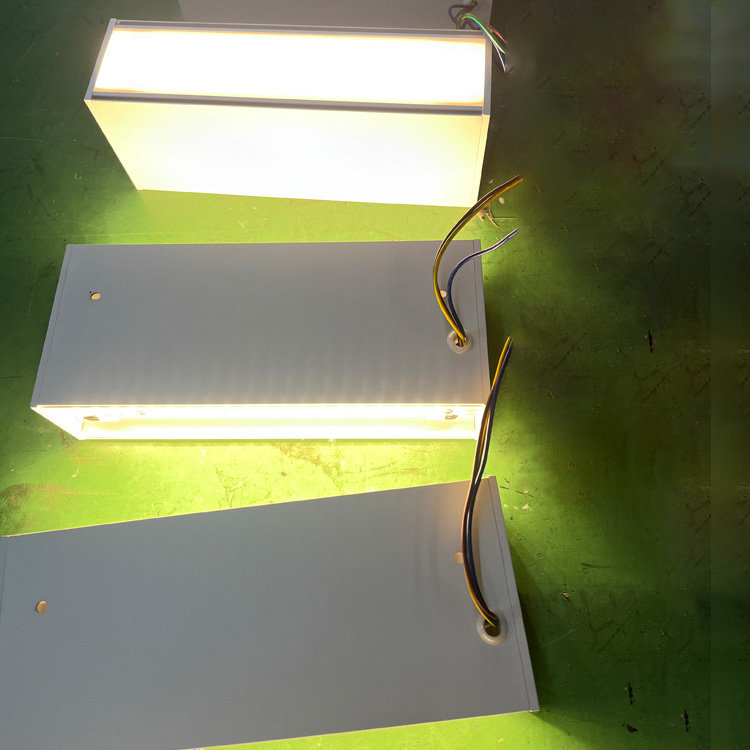
Dual-directional output creates balanced visual weight. This effectively extends the perceived height of multi-story facades. The mechanics of wall grazing utilize narrow beam angles to skim light across textured surfaces like brick, stone, or architectural cladding. This technique creates dramatic depth and shadow. It transforms flat surfaces into dynamic visual elements. The upward throw of up down wall lighting projects clean lines onto architectural features. It highlights cornices, decorative moldings, eaves, and brackets with pinpoint accuracy.
When installing these fixtures, the distance from the wall surface is critical. Mounting a fixture too close creates hot spots. Mounting it too far washes out the texture. A standard offset of 4 to 6 inches usually provides the optimal grazing effect for deep textures like split-face block. For smoother surfaces, a tighter offset might be required to achieve the desired shadow play.
Comparing bidirectional wall lights to traditional ground-mounted uplights reveals significant differences in light control and beam cutoff. Wall-mounted fixtures drastically reduce wasted upward light spill. They offer superior architectural framing. They provide precise articulation of columns and mullions compared to offset, ground-mounted alternatives. The visual impact is a clean, modern aesthetic defined by razor-sharp linear lines. This avoids the cluttered, uncollimated beams associated with traditional spot uplighting.
Maintenance realities strongly favor wall-mounted solutions. Ground uplights face constant threats from landscaping equipment, water pooling, dirt accumulation, and pedestrian interference. Wall-mounted linear lights bypass these ground-level hazards entirely. This ensures consistent performance and reduces ongoing maintenance interventions.
Wall-mounted fixtures eliminate the risk of water ingress from standing puddles.
They prevent accidental damage from lawnmowers and edge trimmers.
They keep the light source above the snow line in colder climates.
They reduce the accumulation of dirt and debris on the lens, maintaining lumen output.
They offer easier access for wiring inspections without digging up landscaping.
Selecting the right optical distribution dictates the success of the installation. Wall grazing optics utilize narrow asymmetric beams to highlight textures. Wall washing optics use broad, uniform light distribution to saturate smooth surfaces. You must match beam spreads to specific building heights and architectural features. A 15° narrow beam works well for tall, narrow columns. A 45° wide beam suits broad, flat facade sections. Color temperature also plays a major role. Specifying a 3000K wall light creates a warm, inviting aesthetic suitable for luxury exteriors. Higher temperatures like 4000K suit modern, high-tech designs. High Color Rendering Index (CRI) and tight color consistency are vital across continuous linear runs to prevent noticeable color shifts.
We often use elliptical beams, such as 10° x 45°, to push light high up a wall while spreading it horizontally. This reduces the number of fixtures needed to cover a wide facade. It also minimizes scalloping effects between fixtures. Always request IES files and run point-by-point calculations to verify light levels before ordering.
Exterior fixtures demand robust environmental protection. Baseline Ingress Protection requirements mandate IP65 or IP66 ratings for complete defense against dust ingress and heavy rain. Impact resistance is equally important. Specify IK08 or higher for fixtures mounted within reach of pedestrian traffic, loading zones, or valet areas. Material selection directly impacts longevity. Corrosion-resistant housings, such as anodized or marine-grade powder-coated aluminum, paired with UV-stabilized lenses, are necessary to withstand harsh weather.
Environmental Protection Standards | ||
Rating | Protection Level | Recommended Application Area |
|---|---|---|
IP65 | Dust tight, protected against water jets | Standard facade mounting above ground level |
IP66 | Dust tight, protected against heavy seas/powerful jets | Coastal properties, areas exposed to severe storms |
IK08 | Protected against 5 joules impact | Pedestrian zones, loading docks, low mounting heights |
Modern architectural wall lighting requires advanced integration capabilities. Connecting fixtures to DMX512 or DALI protocols allows for dynamic scene setting, holiday color changing, and automated dimming schedules. Dimming performance must be smooth and flicker-free down to 0.1%. This prevents abrupt, jarring light level changes that could disturb guest sleep. Evaluate the wiring architecture carefully. Robust daisy-chaining capabilities and extended maximum run lengths minimize the number of required power supplies on expansive facades. This simplifies installation and reduces points of failure.
When wiring DMX systems, always use true 120-ohm DMX cable, not standard microphone cable. Terminate the end of every DMX run with a proper resistor to prevent signal reflection. Keep data runs under 300 meters, or use optical splitters to boost the signal. Proper grounding is non-negotiable to protect sensitive control boards from voltage spikes.
Assess the upfront cost of premium architectural wall lighting against long-term energy savings and reduced replacement cycles. Budget fixtures may seem appealing initially, but the hidden costs accumulate rapidly. Lumen depreciation, noticeable color shifting over time, and the extremely high labor costs associated with replacing failing units on multi-story buildings quickly negate any initial savings. Investing in high-quality fixtures ensures consistent performance and lower operational expenses over the life of the installation.
Labor costs for high-elevation replacements often exceed the cost of the fixture itself. Renting a boom lift or erecting scaffolding just to swap a burnt-out driver is a massive waste of maintenance budgets. Specifying fixtures with L70 ratings above 100,000 hours and robust thermal management systems prevents these expensive interventions.
Evaluate the lead times and budget implications when considering custom fixture lengths, specific RAL powder coating to match building paint, or specialized asymmetric optics. Customization offers a tailored aesthetic but increases costs and delays project timelines. Relying on modular, standard-length fixtures streamlines installation and future-proofs replacement inventory. This ensures that maintenance teams can easily source spare parts when needed.
If you must match a specific facade color, consider standard fixtures with custom-painted snap-on covers or baffles. This allows you to achieve the custom look without altering the core, UL-listed fixture housing. It keeps lead times short and simplifies future replacements.
Uneven facade materials, such as split-face block or deep stucco, complicate flush mounting and compromise weather seals. Address these realities early in the design phase using appropriate mounting brackets and specialized sealants. Retrofit projects present unique challenges. Develop clear strategies for concealing conduit, junction boxes, and remote drivers when installing a new system on an existing building to maintain a clean architectural appearance.
Survey the facade for structural mounting points before finalizing fixture layouts.
Use stand-off brackets to clear uneven stonework and ensure a plumb installation.
Route low-voltage wiring through existing architectural reveals or expansion joints to hide cables.
Locate remote drivers in accessible interior mechanical rooms rather than exterior weatherproof boxes.
Apply marine-grade silicone around all exterior penetrations to prevent water ingress into the building envelope.
Plan for driver replacement and LED board access during the specification process. Select fixtures with easily accessible components to avoid requiring extensive scaffolding or swing stages for basic maintenance tasks. Thermal management is critical. Ensure the fixture design allows for adequate heat dissipation, especially in hot climates. This prevents premature LED failure and maximizes the lifespan of the lighting system.
Look for fixtures with separate driver compartments. This isolates the heat-generating power supply from the sensitive LED diodes. In environments with high ambient temperatures, specify fixtures with extruded aluminum heat sinks that offer maximum surface area for passive cooling. Avoid fixtures that rely on internal fans, as these introduce a mechanical point of failure.
Up and down linear wall fixtures provide the most effective, balanced approach to achieving aesthetic impact, precise glare control, and regulatory compliance for modern hotel exteriors. They elevate the property's visual identity while protecting guest comfort.
Conduct a site-specific photometric study to verify light levels and beam spreads before ordering fixtures.
Request physical mock-ups to test grazing effects on actual facade materials to ensure the desired aesthetic is achieved.
Specify fixtures with proven IP65/IP66 ratings and robust thermal management to minimize long-term maintenance.
Consult with a specialized lighting designer to finalize technical specifications and DMX wiring logistics.
A: The ideal beam angle depends on the architectural feature. Narrow angles (10°-15°) are best for grazing textured surfaces or reaching high elevations. Wider angles (30°-45°) suit broader wall washing applications on smooth surfaces.
A: By utilizing precise optics and sharp beam cutoffs, these fixtures direct light exactly where needed on the facade. This minimizes upward light spill into the atmosphere and reduces overall light pollution.
A: A 3000K color temperature emits a warm, inviting glow that enhances architectural materials like stone and brick. It creates a welcoming, premium atmosphere associated with luxury hospitality.
A: Yes, many commercial-grade linear wall lights are compatible with DMX512 protocols. This allows for dynamic color changing, precise dimming, and integration into centralized building management systems.
A: Wall grazing uses narrow beams mounted close to the surface to highlight textures and create shadows. Wall washing uses wider beams mounted further away to provide smooth, uniform illumination across a flat surface.
A: Exterior fixtures should have a minimum rating of IP65 to ensure complete protection against dust ingress and low-pressure water jets. IP66 is recommended for harsher environments or coastal properties.


