
- All
- Product Name
- Product Keyword
- Product Model
- Product Summary
- Product Description
- Multi Field Search

Views: 141 Author: Site Editor Publish Time: 2026-06-26 Origin: Site


Modern open-plan spaces demand environments capable of shifting seamlessly throughout the day. Static, single-intensity fixtures often fail when transitioning from high-focus tasks to low-glare ambient settings. Utilizing dimmable linear lighting bridges this gap beautifully by combining uninterrupted light distribution with advanced control. Designers frequently struggle to balance aesthetic minimalism and practical utility. Single-use lighting leaves multi-functional rooms feeling either clinically bright or uncomfortably dim, hampering both productivity and relaxation. We need smart, adaptable solutions to solve these spatial challenges effectively without cluttering the ceiling. While their sleek appeal is undeniable, specifying these architectural fixtures requires navigating driver compatibility, precise spatial proportioning, and technical layouts. This guide evaluates the core functional benefits, performance metrics, and strict implementation realities. You will learn exact sizing formulas, driver matching protocols, and integration strategies to help you execute flawless, professional-grade lighting specifications for any modern layout.
Adaptability: Adjustable brightness transforms single-use zones into multi-functional spaces, supporting circadian health and shifting atmospheric needs.
Spatial Efficiency: The minimal footprint of linear profiles enhances perceived ceiling height and architectural depth without visual clutter.
Cost vs. Lifespan: While initial procurement and installation costs are higher, the 25,000–50,000 hour lifespan of a dimmable LED system significantly lowers long-term operational and maintenance expenses.
Proportion is Critical: Successful implementation relies on strict sizing rules (e.g., fixtures spanning only 60–75% of the surface below) and high-quality diffusers to eliminate glare and LED hotspots.
Open-concept designs often blur boundaries separating workspaces, dining areas, and relaxation zones. You cannot rely on static illumination for dynamic living and working. Standard fixtures trap you into one rigid mood. Incorporating adjustable brightness allows a single architectural element to serve multiple functions seamlessly. We see this frequently in modern corporate setups. A large boardroom requires bright illumination for presentations. Later, it needs muted lighting for casual brainstorming. Dimming solves this multi-use dilemma instantly. It transforms how we experience and utilize interior layouts daily.
Transitioning from task to ambient modes represents a major design advantage. At 100% output, linear profiles deliver shadow-free, highly uniform task lighting. You need this intense clarity for detailed computer work or safe kitchen meal prep. When dimmed down to 20-30%, they shift immediately in purpose. The same fixture now provides soft, architectural ambient lighting. This lower setting creates a relaxing atmosphere suitable for entertaining or resting. You avoid the harsh, clinical feel of an over-lit room. Flexible control grants you the exact visual environment necessary for the moment.
Integrating these controls also deeply impacts circadian rhythms and human behavior. Lighting heavily influences our biological clocks and daily energy levels. We can mimic natural daylight cycles by adjusting intensity throughout the day. High-intensity settings reduce eye strain during midday hours. They keep occupants alert and focused. Later, dimming the fixtures promotes relaxation in evening settings. This strategy proves essential for long-term health. It helps regulate melatonin production naturally. Smart illumination strategies support well-being just as much as aesthetic goals.
Visual flow dictates how we perceive interior space. Traditional point-source lighting inherently creates pooled light and harsh shadows. Recessed cans and track heads break the ceiling plane into distracting visual fragments. Linear fixtures behave entirely differently. They deliver a continuous wash of uniform illumination across long distances. This uninterrupted flow elevates both modern corporate spaces and sophisticated residential lighting. You achieve a sleek, minimalist aesthetic devoid of visual clutter. The room feels wider, longer, and decisively more cohesive.
Architectural integration takes two distinct forms based on ceiling height and spatial goals. Designers select between recessed and suspended profiles to maximize impact.
Recessed Profiles: These units push directly into the ceiling drywall. They elevate perceived ceiling heights in low-clearance rooms. You eliminate hanging obstructions entirely. This keeps the upper sightline completely clear and modern.
Suspended Profiles: These fixtures hang securely over specific target areas. They act as minimalist visual anchors over kitchen islands or large conference tables. They guide the eye downward without dominating the surrounding sightline.
Furthermore, linear lighting serves as an optimal foundational design layer. Professional designers rarely rely on one light source alone. They establish a solid base layer first. Linear profiles provide this foundation beautifully. They allow you to safely introduce decorative fixtures afterward. You might add elegant wall sconces or a bold statement pendant. Because the linear base provides an even background wash, you avoid visual chaos. You also prevent over-illuminating specific corners. This balanced, layered approach remains a hallmark of premium office lighting design.
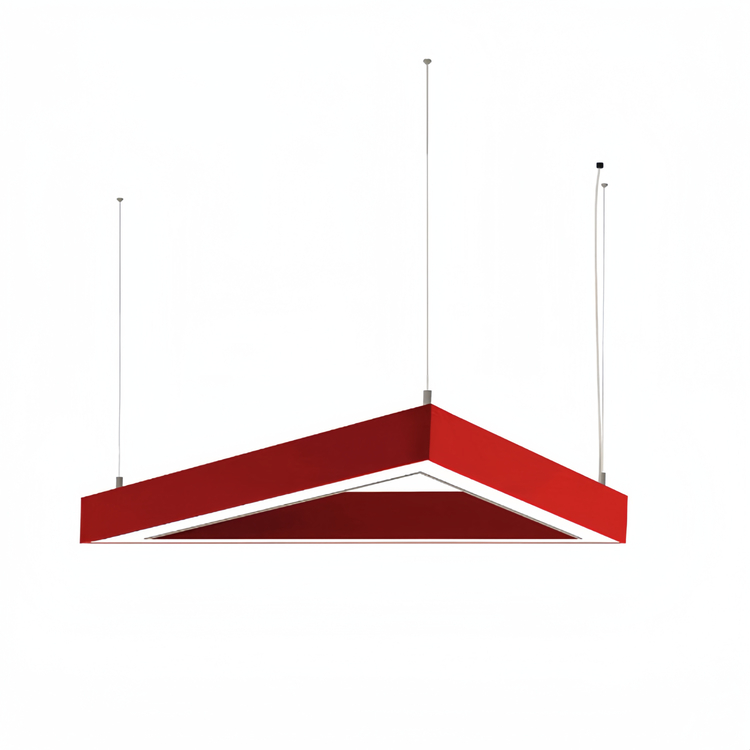
Dimmable systems reduce energy usage significantly compared to legacy fluorescent tubes. The dimming functionality compounds these savings remarkably. By drawing only the wattage necessary for your current task, a dimmable LED limits wasteful power drain. If you dim a fixture to 50%, it uses roughly half the electricity. This linear energy reduction creates massive efficiency gains. Traditional incandescent bulbs waste up to 90% of their energy as heat. Modern linear LEDs convert nearly all energy directly into usable illumination.
Let us compare the basic performance metrics between standard configurations:
System Type | Energy Consumption | Dimming Capability | Lifespan Expectancy |
|---|---|---|---|
Legacy Fluorescent | High (Constant Wattage) | Poor (Prone to flickering) | 10,000 - 15,000 hours |
Standard LED | Low | None | 25,000 hours |
Dimmable Linear LED | Ultra-Low (Scales with usage) | Seamless (0-100%) | 50,000+ hours |
Sustainability and regulatory compliance form the backbone of modern green building codes. Linear LED systems directly support these environmental initiatives. They utilize strictly mercury-free components. This makes them significantly safer for indoor environments and disposal. Furthermore, their efficient operation produces substantially reduced heat output. This drop in ambient heat actively lowers HVAC cooling loads during hot summer months. Integrating these fixtures with smart sensors satisfies stringent energy certifications. Programs like LEED and the WELL Building Standard favor responsive, low-impact illumination. You achieve high-end design while remaining environmentally responsible.
A common specification error is dramatically over-sizing the fixture for the space. Industry best practice dictates strict sizing formulas. The linear light should span exactly 60% to 75% of the surface it illuminates below. For example, if you have a 100-inch dining table, your fixture should measure between 60 and 75 inches. You must leave intentional negative space at both ends. This specific ratio prevents spatial crowding. It stops the ceiling fixture from feeling visually top-heavy or overwhelming the room.
For pendant applications, suspension height matters immensely. The ideal height remains strictly between 75 cm to 90 cm (30-36 inches) above your primary work surface. This precise vertical range maximizes illumination uniformity across the table or desk. It also minimizes unwanted light spill into adjacent walkways. Hanging a fixture too high dilutes its task-lighting effectiveness. Hanging it too low obstructs conversational sightlines.
Managing glare requires careful attention to diffuser quality. Fixtures positioned at eye-level or slightly above seating areas demand high-quality, frosted diffusers. These polycarbonate or acrylic lenses ensure uniform light diffusion. They completely hide individual LED hot spots from direct view. You avoid harsh glare when users are seated nearby. A Unified Glare Rating (UGR) below 19 is highly recommended for comfortable environments.
Before finalizing your electrical placements, always perform a physical mock-up check.
Mark the exact dimensions on your table using paper.
Use painter’s tape on the ceiling to map the fixture’s exact footprint.
Step back and evaluate the proportion from multiple entryways.
Sit at the desk or island to check the proposed suspension height.
This represents a zero-cost way to verify spatial proportions. You catch glaring errors before cutting into expensive drywall.
Not all dimmable LEDs perform equally under real-world conditions. Driver compatibility stands as the most critical specification factor. You must ensure the fixture's driver explicitly matches your wall switch or automated smart system. Mismatched components inevitably cause low-end flickering, buzzing sounds, or sudden drop-offs in light output.
Industry standards rely on three primary dimming protocols:
Phase-Cut (TRIAC): Common in standard residential applications using traditional wall dimmers.
0-10V Dimming: The standard for commercial spaces, offering smooth, low-voltage control.
DALI (Digital Addressable Lighting Interface): Used in advanced smart buildings for precise, individual fixture programming.
Beyond the driver, you must prioritize the Color Rendering Index (CRI). For both retail environments and residential applications, demand a CRI of 90 or higher. High CRI ensures natural, accurate color representation across the spectrum. It makes food look appetizing in kitchens. It renders skin tones healthily in bathrooms. It also ensures your interior finishes and fabrics look appropriately vibrant. Lower CRI values cast a dull, grayish pallor over otherwise beautiful spaces.
Finally, never underestimate installation complexity. Linear systems are strictly not DIY-friendly projects. This is particularly true for recessed profiles or multi-module interconnected runs. They require precise mechanical alignment to eliminate visible seams. They demand calculated circuitry load planning to prevent driver overloads. You must rely on professional installation by certified electricians. Professional handling guarantees safety, seamless aesthetic integration, and reliable long-term performance.
Dimmable linear lighting represents far more than an aesthetic design trend. It serves as a highly functional architectural tool. It solves complex illumination challenges in modern interiors effortlessly. By merging sleek proportions with advanced driver technology, you achieve environments that adapt to human needs.
When moving forward to product specification, prioritize precise measurements. Always base your fixture length on the target surface below, adhering to the 60-75% rule. Demand explicit proof of driver compatibility from manufacturers to ensure smooth dimming performance. Finally, budget appropriately for professional installation. Taking these exact next steps guarantees a seamless, high-end finish that elevates your entire space.
A: No. Unlike traditional incandescent or halogen fixtures, LEDs convert the vast majority of their energy directly into light, not heat. The internal aluminum housing acts as an efficient heat sink. It keeps the fixture cool to the touch. This makes them entirely safe for tight, recessed ceiling installations without impacting your room's ambient temperature.
A: Linear LEDs provide instant-on capabilities, flicker-free dimming, zero toxic mercury, and significantly longer lifespans. Fluorescents degrade in color over time. They often buzz loudly when dimmed. LEDs offer exceptional energy efficiency and modern control, making fluorescent tubes entirely obsolete for premium architectural applications.
A: No. The ability to dim depends entirely on the LED driver installed inside or alongside the fixture. You must specifically purchase a "dimmable" model. Furthermore, ensure the control protocol (such as phase-cut or 0-10V) matches your wall dimmer perfectly to avoid strobing or uneven performance.
A: High-quality fixtures typically offer an operational lifespan of 25,000 to 50,000 hours. In a typical home or office setting, this equates to roughly 10 to 15 years of standard daily use. You will enjoy years of maintenance-free illumination before the internal light engine eventually requires replacement.


