
- All
- Product Name
- Product Keyword
- Product Model
- Product Summary
- Product Description
- Multi Field Search

Views: 175 Author: Site Editor Publish Time: 2026-06-12 Origin: Site


Selecting fixtures for large-scale projects requires balancing architectural aesthetics against strict environmental demands. You must navigate complex design goals seamlessly. You also need to anticipate harsh weather, extreme temperature swings, and strict local regulations. Failing to match fixture specifications to actual site installation realities creates major project headaches. It often leads to premature driver failure. It also invites frustrating code violations, such as unwanted light trespass across property lines. These severe mismatches ultimately inflate your maintenance workloads. They ruin a carefully planned landscape's nighttime appeal.
This guide provides an evidence-based framework to help you specify outdoor LED linear lighting. You will learn how to evaluate hardware profiles properly. We show you exactly how to navigate complex compliance ratings. Finally, we help you ensure reliable, long-lasting performance for your next major installation.
Determine fixture form factors based on a primary goal: security, task, or aesthetic accent lighting.
Match IP ratings to actual site conditions; standard IP65 linear fixtures are insufficient for coastal or submerged environments.
Factor in local ordinances like B.U.G. (Backlight, Uplight, Glare) ratings and Dark Sky compliance before finalizing lumen output.
Account for long-term installation realities, including transformer placement, smart control integration (DMX512/SPI), and future landscape obstruction.
You must clearly define your primary objective before reviewing technical spec sheets. Professionals often refer to this foundational step as evaluating the Golden Triangle. It separates your project needs into three distinct categories.
Security and Safety: Focus strictly on broad coverage. Aim for high overall visibility. Integrate these fixtures directly with motion sensors. You commonly see this approach deployed in parking perimeters and long transit tunnels.
Architectural and Aesthetic: Focus entirely on narrow beams. Prioritize exceptional color rendering. Use highly concealed profiles. This setup works perfectly for exterior facade grazing. It also beautifully highlights intricate bridge contours.
Task and Wayfinding: Focus intensely on glare reduction. Maximize physical durability against impacts. Typical applications include busy loading docks. You also find this need in stairway step lighting.
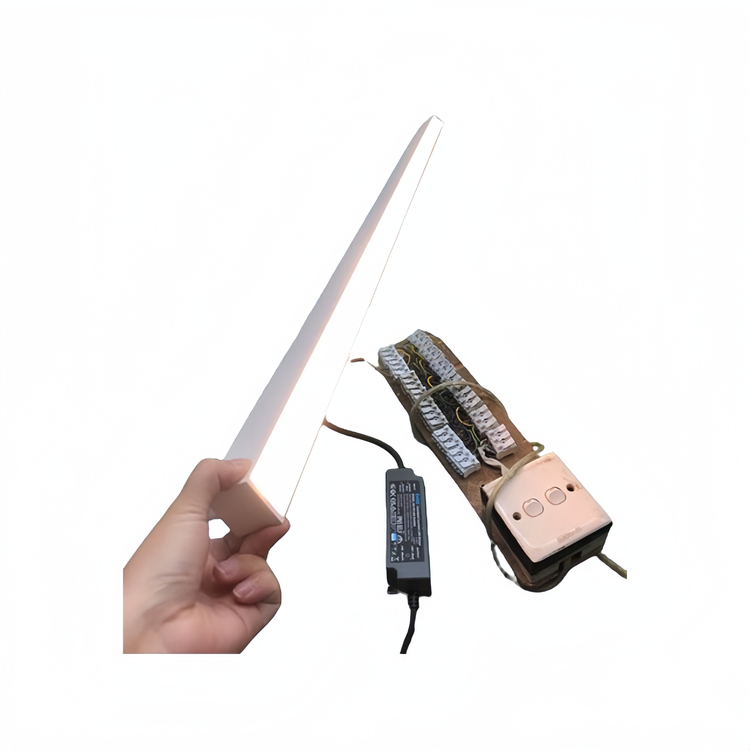
Choosing the correct physical housing prevents costly installation delays. Consider the surface geometry first.
Rigid vs. Flexible: Use rigid aluminum profiles for perfectly straight architectural lines. They dissipate heat extremely well. Choose flexible silicone extrusions for curved, organic surfaces. They bend easily around columns and undulating walls.
Surface-Mounted vs. Recessed: Surface mounts allow rapid retrofitting in many commercial lighting projects. They bolt directly onto existing structures. Recessed profiles create flush, high-end architectural finishes. However, they require pre-planned trenching. They also need specialized poured-in-place housing.
Specialty Shapes: Evaluate your need for specialty form factors. Consider heavy-duty in-ground drive-over fixtures. Wall grazers and dedicated underwater linear units serve highly specific design needs.
Common Mistake: Specifying rigid extrusions for slightly uneven masonry. This forces installers to use excessive shims. It ruins the seamless aesthetic you originally intended.
You must translate your application goals into measurable performance metrics. Getting these numbers right ensures optimal visibility. It also prevents blinding glare.
Align your target lumens directly to the specific application. Too much light ruins nighttime ambiance. Too little light invites safety hazards. Pathways and landscape edges typically need 100 to 200 lumens per linear foot. Security floodlighting demands 700 or more lumens per foot. Always verify local lighting ordinances before maximizing lumen output.
Warm tones generally range from 2700K to 3000K. They suit hospitality venues perfectly. They create inviting ambient outdoor linear spaces. Cool tones sit between 4000K and 5000K. Use them strictly for high-visibility security zones. Always specify a minimum CRI of 80+ for areas covered by security cameras. Cameras need accurate color reproduction to identify vehicles and clothing correctly. Push for 90+ CRI when emphasizing high-end architectural materials like natural stone.
Narrow optics usually range from 15° to 30°. They provide precise wall grazing. They perfectly accent multi-story facades without spilling light. Wide optics exceed 45° to 60°. Use them for broad general area illumination. They work exceptionally well in transition zones, such as parking lot entrances.
Application Type | Recommended Lumens (per foot) | Ideal CCT | Target Beam Angle |
|---|---|---|---|
Landscape Pathways | 100 - 200 lm | 2700K - 3000K | 45° - 60° (Wide) |
Facade Grazing | 300 - 500 lm | 3000K - 4000K | 15° - 30° (Narrow) |
Security Perimeters | 700+ lm | 4000K - 5000K | 60°+ (Very Wide) |
Hospitality Decks | 150 - 300 lm | 2700K | Varies by design |
Outdoor fixtures face relentless environmental punishment. You must scrutinize hardware resilience carefully. Relying solely on basic data sheets often leads to catastrophic project failures.
Standard IP65 linear units offer decent baseline protection. They stop dust ingress completely. They also resist low-pressure water jets. They suit covered eaves or standard wall mounts perfectly. However, they fail rapidly under extreme moisture conditions. IP67 or IP68 ratings remain absolutely mandatory for in-ground installations. Areas prone to heavy pooling water demand these higher ratings. Severe coastal environments require them to combat corrosive salt spray and constant high humidity.
Look beyond the primary LED chip. You must evaluate the quality of the surrounding components. Examine the silicone gaskets closely. Check for fully potted drivers. Insist on waterproof proprietary connectors. Cheap seals degrade quickly under intense UV exposure. They eventually crack and let moisture ruin the internal circuitry.
Ensure the manufacturer's operating temperature range covers your local extremes. A robust range of -40°F to 140°F prevents dangerous color shifting. It also stops early diode burnout. Require high shock and vibration resistance. Evaluate the IK ratings carefully. Commercial installations near high-traffic pedestrian zones need strong impact protection. Transit infrastructure demands similar ruggedness to survive daily vibrations.
Best Practice: Always request a physical sample. Submerge IP67-rated samples in a shallow bucket overnight. Check the internal casing for any microscopic condensation the next morning.
Modern lighting design requires strict adherence to environmental regulations. Ignoring these rules invites heavy fines. It also forces expensive hardware replacements.
B.U.G. stands for Backlight, Uplight, and Glare. The Illuminating Engineering Society developed this comprehensive metric. Municipalities use these specific limits extensively. They enforce community lighting standards to prevent light pollution. You must check your local zoning codes before specifying high-output fixtures. Exceeding the allowed glare rating quickly triggers neighbor complaints.
Implement smart strategies to minimize upward light pollution. Focused downlighting helps tremendously. Physical shields block stray beams from hitting the upper atmosphere. Managing light trespass across property lines is equally critical. Ensure spill light never exceeds 0.5 foot-candles at the exact property boundary. Wildlife habitats also require strict compliance to preserve nocturnal ecosystems.
Plan your installation locations carefully. Avoid long-term obstruction caused by natural tree growth. Growing branches block intended light paths over time. This creates dangerous dark zones on sidewalks. Dark zones increase security risks and site liability issues. Work closely with landscape architects. You must predict canopy expansion accurately over a ten-year horizon.
Brilliant lighting design fails without proper installation logistics. You must manage electrical routing and control systems proactively.
Low-voltage line routing requires strict adherence to underground protocols. Dig your trenches well below local frost lines. Soil heave easily damages shallow cable runs during winter freezes. Transformer placement dictates overall system longevity. Position all power supplies in shaded, north-facing exterior areas. This simple step prevents heat-induced electronic failure. It significantly reduces long-term lifespan degradation.
Standard dimming uses standard 0-10V or PWM protocols. They offer excellent energy conservation for basic setups. Advanced addressable control relies on DMX512 or SPI protocols. These advanced protocols allow incredible pixel-level manipulation. Designers use them to create stunning visual effects on media facades and pedestrian bridges.
Use wattage-selectable fixtures whenever possible. Tunable weatherproof LED units adapt easily to changing site needs. They handle evolving brightness requirements without replacing expensive hardware. Integrate photocells seamlessly into the system. Deploy IoT mesh networks to automate daily light output. They adjust brightness dynamically based on ambient daylight. These smart additions potentially increase energy savings by 30-50% over conventional timers.
Sourcing outdoor linear fixtures requires moving far past basic wattage comparisons. You must rigorously evaluate specific form factors. You also need to verify real-world IP realities against your site geography. Finally, you must meet strict environmental compliance metrics.
Take actionable steps before writing your final specification. Create a structured procurement checklist. Base this document directly on your application purpose. Include all local B.U.G. codes and required smart control systems. Complete these evaluations before requesting vendor samples. This proactive methodology saves valuable project time. It ensures a seamless, highly durable landscape installation.
A: IP65 protects against dust and low-pressure water spray. It works well for under-eave installations. IP67 protects against temporary submersion and heavy water pooling. You must use IP67 or IP68 for in-ground fixtures, exposed decks, and coastal environments.
A: High-quality fixtures typically boast an L70 lifespan of 50,000 to 100,000 hours. This means they retain 70% of their initial brightness over time. Actual longevity heavily depends on driver quality. Proper thermal management and shaded transformer placement also extend fixture life significantly.
A: Retrofitting recessed lighting into cured concrete is highly difficult and expensive. It requires extensive trenching and compromises structural integrity. Always pre-plan recessed housings before pouring. For completed masonry, surface-mounted extrusions provide a much more practical and cost-effective alternative.
A: A blue tint indicates severe phosphor degradation. Poor thermal management inside low-quality fixtures causes excessive heat buildup. This heat burns off the yellow phosphor coating over the LED chip. Choosing fixtures with robust heat sinks prevents this unwanted color shift.


