
- All
- Product Name
- Product Keyword
- Product Model
- Product Summary
- Product Description
- Multi Field Search

Views: 134 Author: Site Editor Publish Time: 2026-06-30 Origin: Site


The shift from traditional fluorescent tubes has completely revolutionized modern architecture. We no longer tolerate the dark spots, ballast failures, and bulky aesthetics of older fixtures. Today, seamless integration drives cutting-edge lighting design. Modern commercial and residential spaces demand more than just basic illumination. Choosing the right fixture becomes a measurable operational decision. This specific choice impacts energy overhead, cooling loads, and employee visual comfort. Relying on outdated systems drains facility resources and harms daily productivity.
This guide breaks down the technical components of these advanced luminous systems. You will learn how to evaluate their core performance benefits comprehensively. We also provide a strict evaluation framework for specifying the right setup. You can then apply these exact rules to your specific commercial or high-end residential spaces to ensure optimal performance.
Operational Efficiency: Replaces legacy fluorescent fixtures, eliminating ballast maintenance and reducing energy consumption by up to 80% while inherently producing less heat.
Architectural Flexibility: Supports modular configurations (T-shape, L-shape) and multiple mounting profiles to fit varying ceiling architectures.
Quality of Light: Delivers continuous, uniform illumination without the uneven shadowing characteristic of traditional point-based light sources.
Specification Criticality: Successful deployment requires evaluating strict parameters, notably UGR (Unified Glare Rating), driver compatibility, and thermal management.
We must define the indoor LED linear lighting fixture accurately before planning an installation. It operates as an integrated, continuous luminaire. Manufacturers design it to distribute light evenly over a narrow, extended footprint. This specific engineering approach solves the notorious "dark spot" connections common in older fluorescent systems. You get a clean, continuous line of light.
Let us examine the exact anatomy of the fixture. A high-performing system relies on four core physical components. Each part plays a crucial role in maintaining overall longevity and output quality.
Light Engine: The internal LED strip light or rigid diode board sits at the core. It provides high-efficiency directional illumination. Diode density directly influences how smooth the light appears.
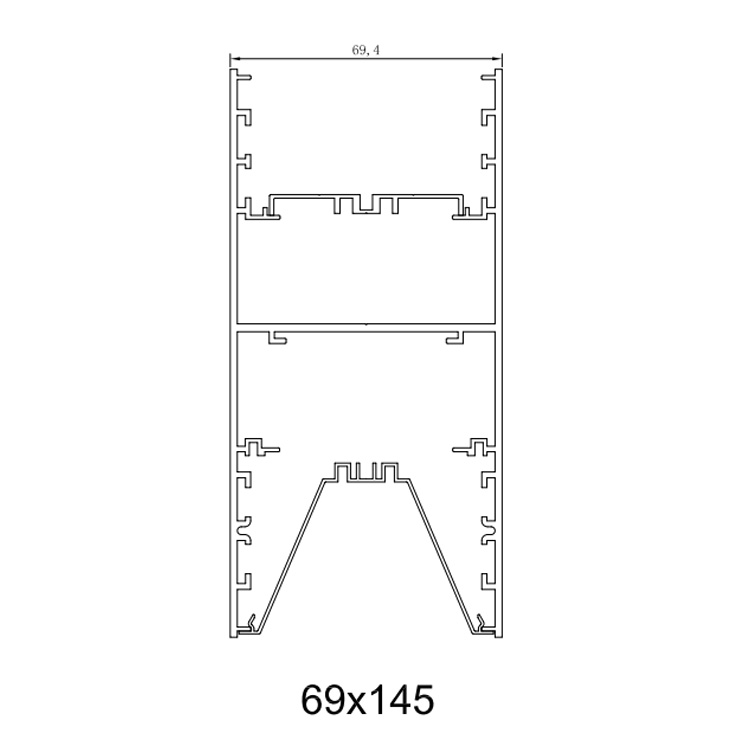
Extrusion/Housing: Manufacturers typically use high-grade aluminum. It acts as the structural body. It also functions as the primary heat sink for crucial thermal dissipation.
Driver: This power regulation unit remains absolutely critical. It prevents voltage fluctuations and eliminates flicker. It also enables smart dimming controls across the network.
Diffuser/Optics: This outer layer ensures efficient visual comfort. It minimizes glare while maximizing light output. You achieve this smooth diffusion without relying on traditional bulky reflectors.
Switching to modern linear systems goes far beyond basic aesthetics. The operational advantages present themselves immediately upon installation. Beyond direct wattage savings, the directional nature of LEDs prevents light loss inside the housing. Lower thermal emissions also reduce the summer cooling load in commercial facilities. You save on both lighting power and HVAC electrical usage simultaneously.
These systems drastically eliminate recurring maintenance cycles. You completely stop replacing burnt-out fluorescent tubes and faulty ballasts. High-quality systems offer incredible 50,000+ hour lifespans. They also feature robust shock and vibration resistance. This durability proves invaluable in industrial or high-traffic commercial zones.
Shadow reduction provides another major operational win. Consider standard downlights or spotlights. They naturally create harsh, uneven pooling across a room. Conversely, a continuous linear run provides uniform task and general lighting. This strict uniformity is essential for proper office ergonomics and reducing daily eye strain.
Finally, compliance and environmental safety improve drastically. Mercury-free and phosphor-free construction eliminates toxic disposal hazards entirely. These inherent green characteristics easily comply with modern environmental building standards and certifications.
Feature | Traditional Fluorescent | Modern LED Linear |
|---|---|---|
Lifespan | 10,000 - 15,000 hours | 50,000+ hours |
Heat Emission | High (Increases HVAC load) | Low (Highly efficient heat sink) |
Light Distribution | Prone to dark spots at joints | Seamless, continuous illumination |
Toxicity | Contains mercury and phosphor | 100% toxic-free materials |
How you mount the fixture changes the spatial dynamic entirely. You must match the installation profile to the specific ceiling architecture.
You will find this method best for exposed ceilings. Industrial retrofits heavily favor surface mounting. It works perfectly for spaces lacking drop-ceiling clearance. The main decision factor here is the low installation cost. You also gain the absolute easiest maintenance access. However, it looks slightly less integrated aesthetically compared to flush options.
This mounting profile remains ideal for high-end corporate environments. Minimalist retail spaces and low-ceiling areas benefit greatly. A recessed linear installation delivers a seamless, invisible-housing look. The primary trade-off involves precise drywall and ceiling grid preparation. It invariably carries a higher upfront installation cost, but the visual payoff is immense.
Open floor plans and high-bay environments often require suspension. This specific profile delivers excellent focused task lighting over desks and conference tables. A ceiling linear fixture adds incredible architectural depth. You can customize its physical length and hanging pattern easily. However, it requires careful calculation of suspension drop-height. You must ensure proper foot-candle distribution hits the working plane evenly.
Different industries leverage these fixtures for entirely unique spatial purposes. Understanding the context helps you specify the correct lumen output and housing design.
Facility managers focus heavily on uniform task illumination here. They require strictly low-glare environments to reduce student and employee eye fatigue. Uniformity keeps focus high and daily fatigue low. Micro-prismatic diffusers usually excel in these environments by scattering light gently.
These dynamic sectors utilize wall-wash and cove configurations frequently. Designers highlight vertical product displays and guide foot traffic smoothly. They establish distinct brand aesthetics via customized color temperatures. Warm lighting naturally invites guests in hotel lobbies, while cool lighting energizes high-end retail displays.
Architects love highlighting the utility of slim-profile fixtures here. A compact indoor linear light easily excels in elevators, tight corridors, and underground transit stations. Low heat emission and exceptionally long maintenance intervals become critical in these hard-to-reach areas. You avoid shutting down critical walkways for frequent bulb replacements.
Successful specification requires strict adherence to core technical metrics. You cannot base purchasing decisions on aesthetics alone.
UGR (Unified Glare Rating) & Beam Angle: For office and educational use, lighting standards typically mandate a UGR of <19. This exact rating ensures maximum visual comfort. Ensure the beam angle matches your specific application. Use narrow beams for tasks and wide beams for ambient fill.
Luminous Efficacy (lm/W): Do not evaluate fixtures on wattage alone. Look directly for high lumen-per-watt ratios. This crucial metric guarantees true energy efficiency.
CRI & CCT Flexibility: Ensure a CRI (Color Rendering Index) of >80 for general commercial use. Retail spaces strictly require >90 CRI for accurate product color display. Evaluate whether your space needs tunable white or dynamic CCT for mood adjustments.
Control Protocol Compatibility: Verify the driver seamlessly integrates into the building's existing management system. Common protocols include DALI, 0-10V, DMX, or standard PWM dimming.
Modular Scalability: If you plan to build custom architectural shapes, verify the manufacturer’s capability. They must supply seamless T, L, or X connectors. You absolutely cannot accept light leakage at the intersection joints.
Always request photometric IES files from the manufacturer. Plug these files into lighting simulation software. This step visualizes the exact lumen spread before you purchase a single unit.
You must anticipate potential failures during the design phase. Addressing risks early saves significant capital.
Heat buildup rapidly destroys diode lifespan. If the aluminum housing is too thin, heat traps inside the fixture. If internal LED boards are heavily over-driven, they generate excess thermal load. This physical stress causes rapid lumen depreciation and severe color shifting over time. Always specify appropriately thick aluminum extrusions.
Retrofitting modern linear systems onto incompatible legacy dimmer switches creates massive visual problems. You will likely experience a severe stroboscopic flickering effect. This electrical mismatch also causes premature driver burnout. Always verify electrical compatibility or upgrade the wall switches before full installation.
Over-spacing the fixtures causes frustrating dark zones on the floor. Under-spacing wastes both raw energy and budget capital. A professional photometric layout (using software like DIALux) acts as a mandatory prerequisite before you procure any fixtures. It removes all guesswork from the equation.
Indoor LED linear lighting is clearly not merely an architectural trend. It stands as a foundational physical upgrade for operational efficiency. It maximizes vertical space utilization and drastically improves occupant comfort across all sectors. Relying on continuous lines of light elevates the structural aesthetic while lowering electrical overhead.
When transitioning your facility, prioritize fixtures backed by verifiable photometric data. Demand robust thermal extrusion and control-compatible drivers over baseline cheap pricing. High-quality internal components prevent costly downstream failures.
Consult a certified lighting specialist today for a comprehensive photometric space audit. Request detailed technical spec sheets to compare your top fixture choices effectively.
A: Yes, but it explicitly requires bypassing or removing the existing ballast. Full fixture replacement is often more reliable and aesthetically cohesive than simply swapping tubes into old, degrading housings.
A: An LED strip is merely the flexible circuit board containing the bare diodes. A linear fixture is the complete, rigid luminaire housing that includes the internal strip, the outer aluminum extrusion, the driver, and the diffuser.
A: UGR rigorously measures the direct glare produced by the luminaire. In continuous linear runs, poorly diffused light easily causes severe eye strain. This makes a UGR rating of under 19 absolutely critical for commercial and desk-focused environments.


